Dr. Jayanthi V. Subbarao & Dr.V.K. Raju Retinopathy of Prematurity (ROP) Centre
Retinopathy of Prematurity (ROP)
It is reported that over 3.5 million preterm infants are born in India annually. improved neonatal care has increased the survival of these preterm infants and hence increased the incidence of retinopathy of prematurity (ROP). ROP is the leading cause of infant blindness in India. Timely screening of preterm infants and necessary treatment can prevent ROP-related blindness. However, only a few ROP specialists are available to screen these preterm infants, particularly in rural areas where the majority of the preterm babies are born. With over 60% of the Indian population living in rural areas, lack of universal screening of all the pre-term babies continues to contribute to ROP related blindness. The availability of digital wide-angled fundus camera and information technology have made application of telemedicine in ROP screening possible. SUNDROP, e-ROP, and KIDROP studies have validated the safety and efficacy of telemedicine in ROP screening.
Retinopathy of prematurity (ROP) or Terry syndrome, previously known as retrolental fibroplasias, is a disease of the eye affecting prematurely born babies who receive oxygen therapy due to the premature development of their lungs. It is thought to be caused by disorganized growth of premature retinalblood vessels which may result in scarring and retinal detachment. ROP can be mild and may resolve spontaneously, but it may lead to blindness in serious cases. As such, all preterm babies with very low birth weight are at risk for ROP, hence they should be screened within 1 month of their birth. Both oxygen toxicity and relative hypoxia can contribute to the development of ROP.Causes By the fourth month of pregnancy, the foetal retina has begun to develop vascularization. Such formation of blood vessels appears to be very sensitive to the amount of oxygen supplied, either naturally or artificially. Risk Factors Various risk factors that contribute to the development of ROP are:
- Prematurity
- High exposure to oxygen
- Low birth weight
- Various types of infections
- Cardiac defects
The “GEMROP” Project
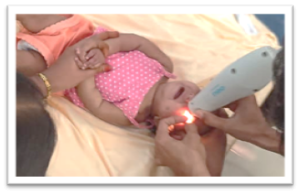
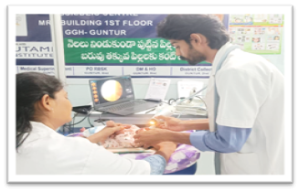
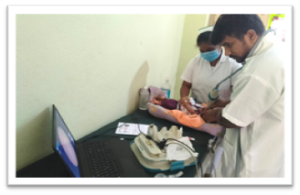
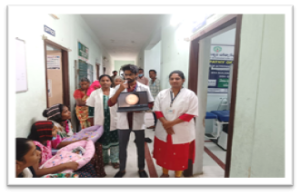
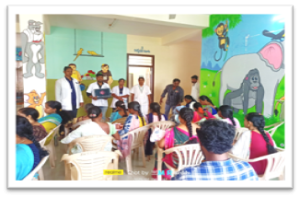
We, at Goutami Eye Institute has initiated a telemedicine based screening of ROP called GEMROP (Goutami Eye Tele Medicine Retinopathy Of Prematurity) in 2015. Under this project, ROP screening is done by a trained technician with a wide angled retinal camera. The images obtained are sent to a remote ROP specialist via the Internet. The treatment and follow-up protocols are determined by the remote ROP specialist. All the images are analysed and classified according to International Classification of Retinopathy of Prematurity (ICROP) group guidelines. The Early Treatment for Retinopathy of Prematurity Cooperative Group (ETROP) guidelines are followed to determine the premature infants who require treatment. Currently we are catering to few neonatal centres of East Godavari, West Godavari, Krishna, Prakasam, Nellore, Kadapa, Anantapur, Kurnool and Chittoor districts of Andhra Pradesh. We have also extended GEMROP in Kolkata region, in association with Rotary Club, Calcutta & Priyamvada Birla Eye Hospital, Kolkata and also Nepal in association with the Eastern Regional Eye Care Program / Biratnagar Eye Hospital, recently. From the initiation of the project in 2015 till March 2025 we have screened 25,769 babies and treated 2,067 babies in Andhra Pradesh. In addition, screened 3,282 babies and treated 389 in Kolkota during 2020 – 2023 and screened 1,275 babies and treated 60 babies in Nepal till March 2024.
All the babies who were screened and who were treated have a favourable outcome.
In developing countries like India with few ROP specialists, ROP screening by an ophthalmic technician employing telemedicine seems to be a valuable and effective option to prevent ROP-related blindness.